
The red carpet at the Cannes Film Festival is experiencing a beautiful cultural shift. Instead of blending into global fashion trends with Western ballgowns, Indian actors, designers, and creators are choosing to stand out by wearing their roots. Traditional handlooms, generational textiles, and regional drapes have officially become the new global luxury.
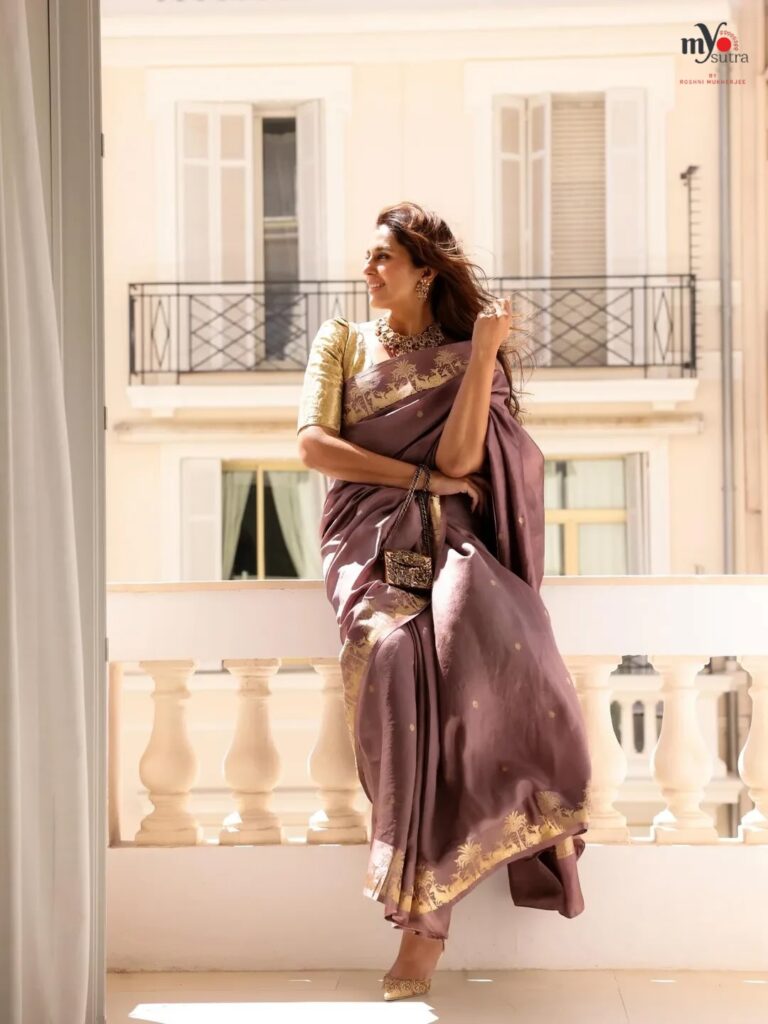
- Banarasi Silk Gets a Riviera Remake
The sacred arts of Varanasi met the glamour of France when actor Huma Qureshi stepped onto the carpet. She wore a stunning purple Banarasi silk saree from the house of Shanti Banaras. The design featured a modern, Riviera-friendly palm leaf brocade woven with intricate antique gold zari work, proving that heritage fabrics can look incredibly fresh on the world stage.
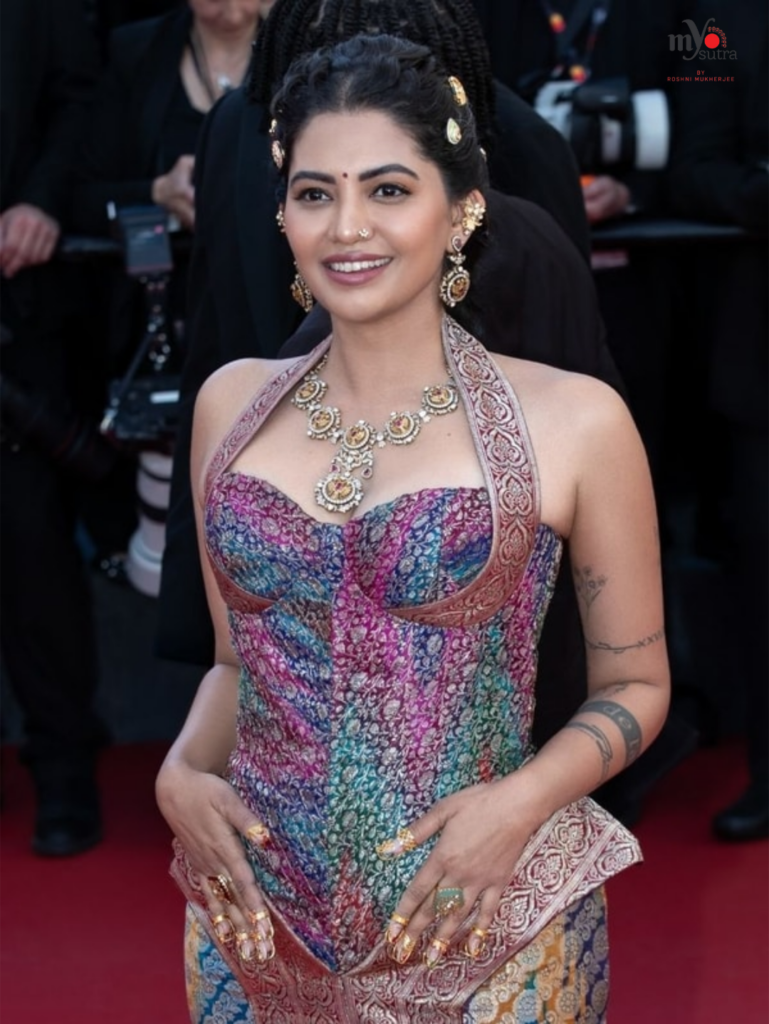
- Upcycled Heirlooms: Sustainable Couture
In a brilliant nod to eco-conscious luxury, digital creator Disha Madan wore a structured, western-style corset gown beautifully reconstructed from two 80-year-old vintage silk sarees. Designed by Niharika Vivek, the backless, modern silhouette perfectly blended vibrant South Indian heritage with contemporary architecture.
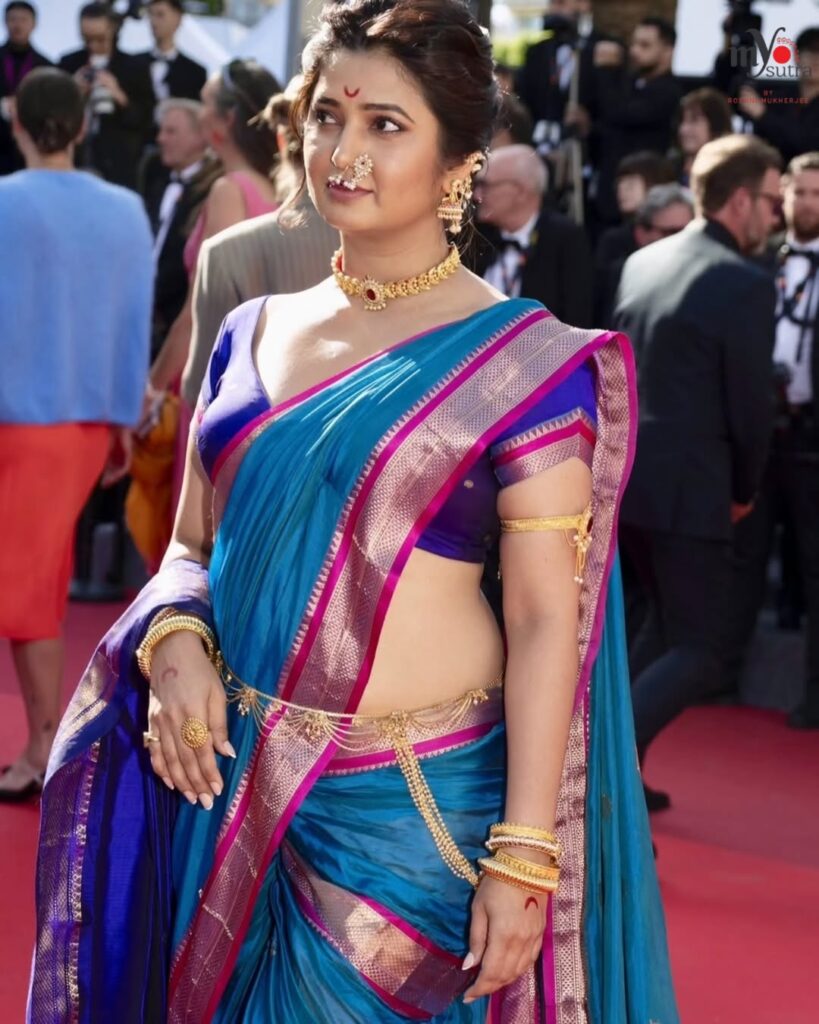
- Regional Pride: The Nauvari and Paithani Takeover
Skipping Western fusion entirely, actors Prajakta Mali chose absolute cultural authenticity. Prajakta Mali made her debut in a royal blue Peshwai silk Nauvari saree (the traditional nine-yard drape) and a shela from Nirupa’s Yeola Paithani & Silk Sarees, accessorized with an authentic Maharashtrian nath. As she shared, “Showing the Marathi impression to the world is indescribable.”
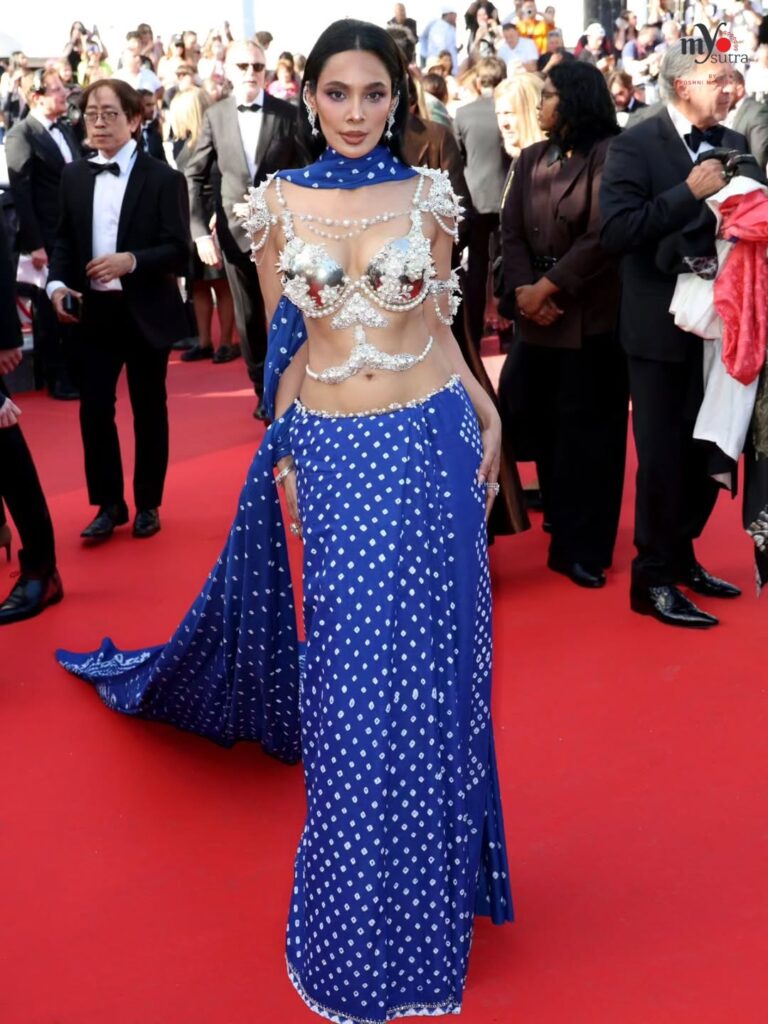
- Generational Artistry: Kutch Ajrakh and Bandhani
Content creators took up the mantle of fashion historians by showcasing India’s time-intensive textile arts. Ishita Mangal brought a striking fusion look combining two distinct Bandhani sarees from Rajasthan—an art form featuring microscopic hand-tied knots—while others proudly showcased Gujarat’s ancient, block-printed Kutch Ajrakh. - Draped Concepts and Symbolic Statements:
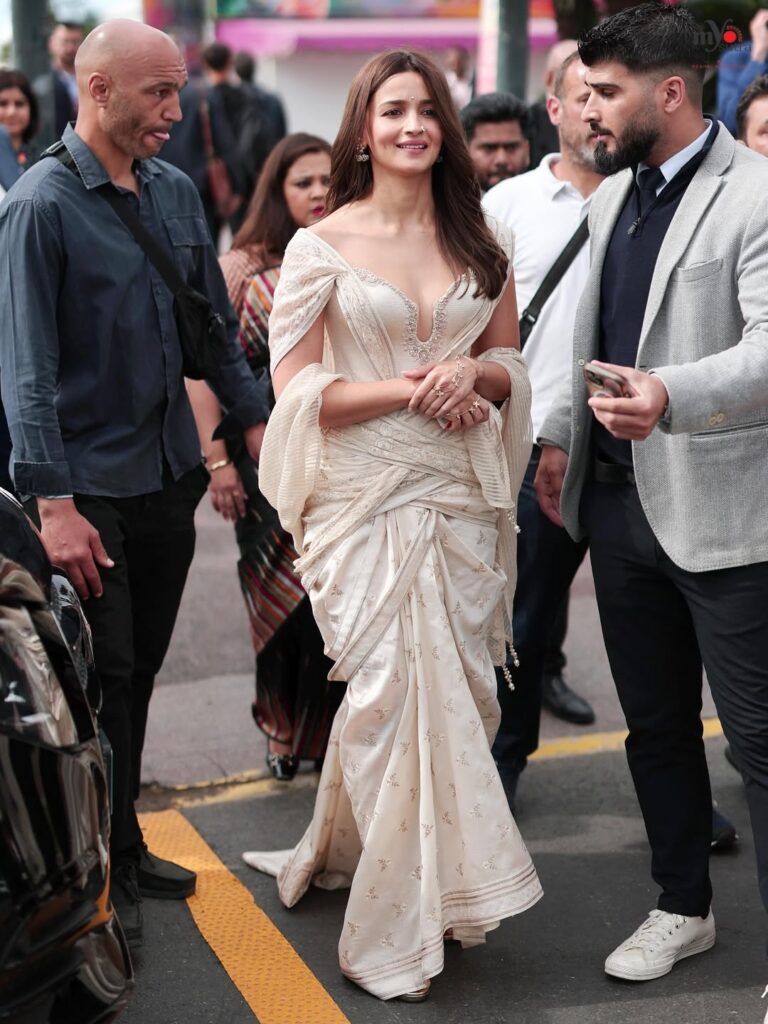
Alia Bhatt’s Custom Drapes: Alia Bhatt showed the versatility of the saree silhouette in a custom Tarun Tahiliani draped-concept saree, featuring delicate floral embroidery styled with a modern corset and a traditional nath.
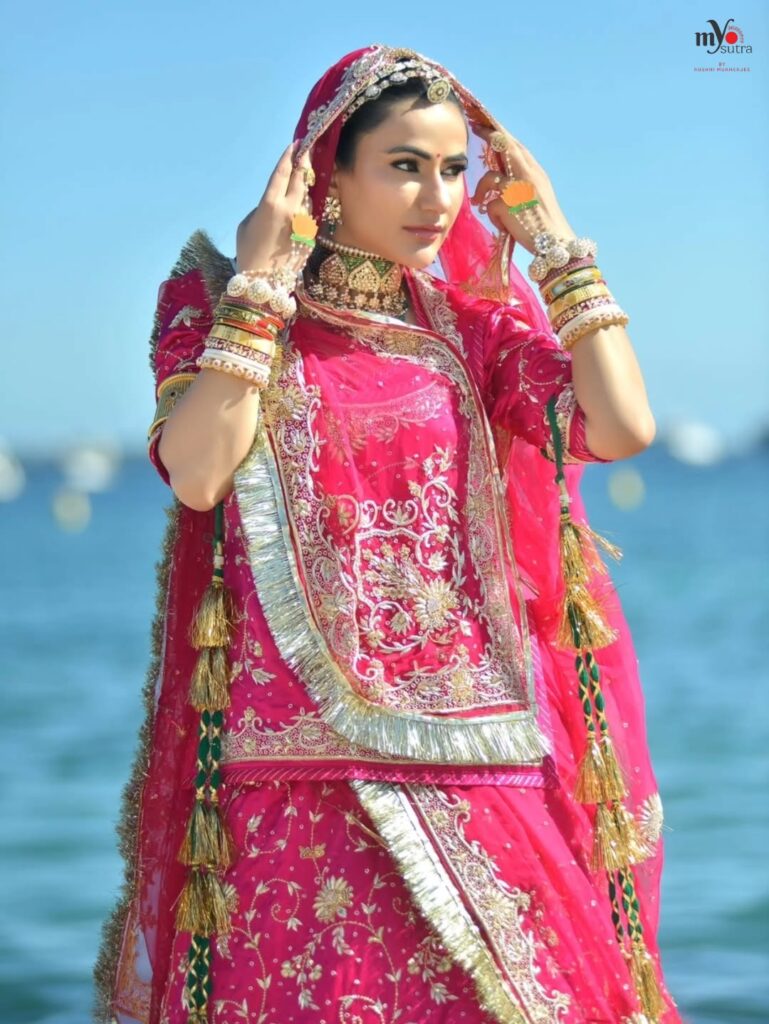
Ruchi Gujjar’s Poshak of Resistance: Actor Ruchi Gujjar wore a striking pink Rajasthani poshak with intricate zari embroidery by Roopa Sharma, complete with a ghunghat (veil). She stated, “I did not wear the ghunghat as a symbol of silence. I wore it as a symbol of resistance.”
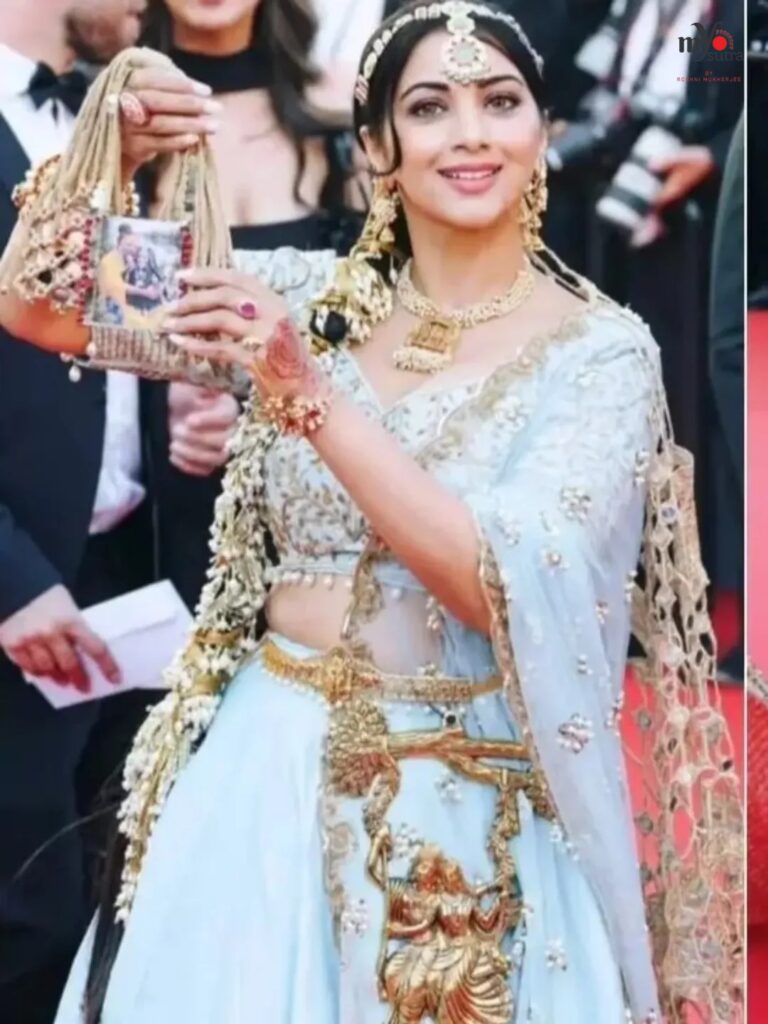
Anjali Phogat’s Spiritual Tribute: Designer Anjali Phogat walked the carpet in a serene white lehenga adorned with fresh flowers. Her look featured an idol of Lord Krishna and Radha suspended at her waist, carrying a message of Prem, Bhakti, and world peace.
The New Definition of Luxury
The heavy presence of traditional textiles at Cannes highlights a massive shift: Indian fashion is no longer trying to fit in. When a heritage weave walks the red carpet, it carries the livelihoods of regional weavers and thousands of years of history. Right now, that is the ultimate form of luxury.